The Ultimate Guide to Google Core Web Vitals: Tips and Techniques [2023]

The Ultimate Guide to Google Core Web Vitals: Tips and Techniques [2023]
Google Core Web Vitals


On May 28, 2020, Google unveiled Core Web Vitals - a set of metrics designed to enhance user experience and elevate website ranking. By evaluating speed, responsiveness, and visual stability, Core Web Vitals offer increased opportunities for improving website ranking.

In this post, we'll provide an in-depth look at Google Core Web Vitals and their impact on Google's ranking system. Additionally, we'll explore how these metrics can assist web developers and site owners in gaining insight into visitor behavior. Our goal is to make this information accessible and easy to understand for our readers.

To begin, let's dive into the fundamentals of Core Web Vitals.

An Overview of Google Core Web Vitals


Core web vitals metrics

Google employs Core Web Vitals, a group of metrics that evaluate user experience more accurately. These metrics are connected to page load time, page interactivity, and content visual stability during loading.

Google's mission is to provide the best user experience for its searchers by ensuring that all websites in its index meet a high standard. As per Google's official statement, the search engine prioritizes pages with the most useful information. Consequently, the Google Web Vitals have become a vital ranking signal. It is essential to assess the new Page Experience scores or signals.

These scores are calculated for each page on both desktop and mobile devices. Improved website performance could lead to increased visibility.This is an excellent time to review other essential aspects of your website, such as on-page optimization, content depth, and internal linking.

The Significance Google Core Web Vitals


Web vitals performance

Google's Core Web Vitals not only affect user experience but also influence page performance. Google aims to prioritize a page's experience as a critical factor in determining a website's ranking.

Therefore, your company's website's page experience score will most likely be based on these Core Web Vital metrics.
It's essential to note that while a high page experience score is vital, it's just one of several factors that contribute to search engine optimization (SEO) ranking. It won't automatically guarantee a top spot for your website.

Here are three compelling reasons why website owners must prioritize Core Web Vitals:

Performance Web vital metrics


1- Enhance User Experience to Boost Revenue: Fast, user-friendly, and accessible from any device or location - these are the qualities visitors appreciate in a website. By prioritizing user experience, you can improve your website's appeal and increase revenue.

2- Core Web Vitals: A Crucial Ranking Factor: Core Web Vitals have emerged as a crucial ranking factor. Although relevance still holds more significance, we expect Core Web Vitals to gain more importance over time, affecting website ranking.

3- Good User Experience Equals Better SERP Ranking: A website that passes the Google Core Web Vitals test delivers a good user experience, resulting in fewer users returning to the SERP. Google has also introduced a "Good Page Experience" badge in search results. This is an indirect ranking factor that affects searcher behavior, leading to more clicks on pages with this badge, ultimately impacting Google's algorithms.

Core Web Vitals Metrics:


Let's get started by examining the Core Web Vitals - the key metrics that determine page experience.

To measure page experience, we'll delve into three crucial Web Vitals metrics that site owners need to focus on.

This post will also cover other non-Core Web Vitals metrics in detail later on.

Each metric provides a clear picture of the quality of a specific aspect of the page experience.

Largest Contentful Paint (LCP)


Core Wev Vitals LCP

                              Image Source

The Largest Contentful Paint (LCP) is a crucial metric that determines how quickly the largest element on your website loads. This element could be an image, text block, video, or animation, and may vary depending on the device used to access the website.

The LCP element is typically located at the top of the page, above the fold, and is the most important factor in determining perceived load speed and user experience. A faster loading time for LCP is always better for users.

To put it simply, LCP measures the time it takes for the largest element on your webpage to become visible. A slow LCP could lead to poor user experience, causing visitors to abandon your site.

Google recognizes the significance of LCP and has included it in the Google Core Web Vitals metrics. This means that LCP plays a significant role in determining how well your website ranks in terms of user experience. Therefore, it is crucial to focus on improving your LCP score to ensure a fast and seamless user experience.

Important Factors To Consider

When it comes to the Largest Contentful Paint (LCP) metric, there are a few important factors to keep in mind. The biggest text block or image element on a page is what's being measured, and it can change while the page is loading. The most recent candidate is used to calculate the LCP.

It's important to note that "SVG" elements are currently not considered for the LCP calculation, but this may change in the future. The LCP score has a standard set by Google, with a good score being 2.5 seconds or less. A score between 2.5 and 4 seconds needs improvement, while a score over 4 seconds is poor.

There are various factors that can cause a low LCP score, including slow server response times, render-blocking JavaScript and CSS, and large content resources. To improve your LCP score, make sure your images are compressed and in the next-generation format, with image sizes around 100 KB or less. Scaling and defining image sizes can also help.

Improving the LCP metric can be challenging due to the many variables that can influence it. Optimizing your critical rendering path, CSS, and images can help improve your LCP score. Remember, a good LCP score not only provides a great user experience but also improves your SEO performance.

Lastly, the LCP metric accounts for 25% of the total PageSpeed Insights score, so improving it can also improve your page speed grade. In summary, the LCP is one of the most important performance metrics you should focus on to provide a great user experience and improve your website's overall performance.

Understanding First Input Delay (FID) and Its Significance for Website Performance


Core Web Vitals FID


                              Image Source

First Input Delay (FID) is a crucial metric for website owners to measure as part of their Google Core Web Vitals. It evaluates how fast a web page can respond to a user's first interaction, such as clicking a button, tapping a link, or pressing a key.

FID is measured in milliseconds, and it is the time elapsed between the user's first interaction with the website and the browser's response to that action.

Imagine you land on a website and click a link or button, expecting the page to load quickly. Unfortunately, this isn't always the case. You may have to wait a few seconds for the browser to respond, which can be frustrating. This delay is typically due to the browser being busy with another request, usually related to JavaScript files processing.

To improve user experience and ensure that visitors do not abandon your website, it is important to keep FID scores low. This metric helps to measure how quickly a web page can respond to user input, and ultimately, it impacts your website's overall performance and search engine ranking.

Important Factors To Consider

First Input Delay (FID) is a crucial Google Core Web Vitals metric that measures how long it takes for a browser to respond to a user's first interaction with a webpage. Note that actions like scrolling or zooming are not considered in FID measurements.

Because FID is based on user interaction, it can only be measured in the field, making it different from other Core Web Vitals metrics that can be evaluated in a laboratory setting. Lighthouse and other tools rely on Total Blocking Time (TBT) as a proxy to measure interactivity and responsiveness in the absence of user interaction. However, a low TBT score typically correlates with a good FID score.

To achieve a good FID score, you need to focus on reducing JavaScript execution time, minimizing main thread work, and reducing the impact of third-party code. A high FID score indicates that the browser is not able to respond to user interaction quickly, which can lead to a poor user experience.

Improving FID performance can also have a positive impact on your page speed score. A good FID score is less than or equal to 100ms, while a score greater than 100ms and less than or equal to 300ms requires improvement. Scores over 300ms are considered poor.

For more information on improving FID scores, we recommend exploring the resources available on web.dev. Remember that improving FID scores is just one aspect of optimizing your website for search engine optimization.

Cumulative Layout Shift (CLS)


Core web vitals CLS
                            Image Source


The Cumulative Layout Shift (CLS) is a crucial Google Core Web Vitals metric that measures the visual stability of a page and its impact on the user experience. Whenever the content on a page changes, even if you haven't clicked on anything, it can cause a layout shift. This metric is available in both field and lab data formats, and a lower CLS score indicates better visual stability.

Layout shifts can be frustrating for users and occur for various reasons, such as new images or ads loading above the fold, which pushes the content down, causing it to shift its position on the page. These shifts can make it difficult for users to interact with the page, resulting in a poor user experience.

The Cumulative Layout Shift is a vital metric that, along with the Largest Contentful Paint and First Input Delay, was added to the Page Experience ranking factor in June 2021. It accounts for 15% of the PageSpeed score, making it highly relevant to SEO performance.

Unlike other metrics, CLS is not measured in seconds; instead, it refers to elements that move between two frames and measures their movement in the viewport based on the size of the viewport. The layout shift score comprises two components: the "distance fraction" and the "impact fraction."

Improving the visual stability of a page can be achieved by optimizing images, videos, and ads, among other things. You can use the "layout instability" report in Google Search Console to identify and fix issues related to layout shifts. Improving your CLS score will result in a better user experience, improved SEO performance, and increased user engagement on your website.


impact fraction web vitals

                                                        Image Source

To calculate the Cumulative Layout Shift (CLS) score, Google Core Web Vitals considers two components: the "impact fraction" and the "distance fraction." The impact fraction is the percentage of the viewport occupied by the unstable element in both frames, while the distance fraction is the maximum distance that the unstable element travels between the frames divided by the larger dimension of the viewport (width or height).

CLS measures the visual stability of a webpage, which is critical to user experience. Have you ever experienced content shifting when you try to click a button, or an ad loading and pushing other elements down? These are examples of layout shifts, which can be frustrating for users. CLS is one of the three Core Web Vitals metrics that assess the user experience of a webpage, along with Largest Contentful Paint and First Input Delay. In June 2021, these metrics were added to the Page Experience ranking factor, accounting for 15% of the PageSpeed score.

CLS can be measured using both field and lab data and is not measured in seconds. Instead, it refers to elements that move between two frames and calculates their movement in the viewport based on its size. Improving visual stability can result in a better CLS score and ultimately lead to better SEO performance.

distance fraction core web vitals

                          Image Source

Important Factors To Consider

Consider the following important factors when it comes to optimizing your page's user experience:

The Cumulative Layout Shift (CLS) is a metric that measures the visual stability of a page during its entire lifecycle, which means that the CLS score is measured even if the page remains open for days or weeks. However, keep in mind that CLS field data and lab data may differ since lab data is only collected for a short time.

Testing for unexpected layout shifts in test environments can be challenging, as some functionalities may be disabled or behave differently, such as disabled cookie notifications or live chat support, and unloaded personalized content.

To achieve a good CLS score, the score should be <=0.1. A score of >0.1 and <=0.25 needs improvement, while a score of >0.25 is poor.

Poor CLS scores are often due to images or ads with undefined dimensions, asynchronously loaded resources, and the addition of new DOM elements dynamically to a page above previously loaded content. This causes content that has already been loaded to be removed.

Improving your CLS score can be achieved by including size attributes for images and videos and avoiding inserting content above previously loaded content. You can also check out web.dev's article on optimizing CLS scores to learn more.

Other non-Core Web Vitals include Total Blocking Time (TBT), Speed Index (SI), and Time to Interactive (TTI).

Total Blocking Time (TBT)


Total Blocking Time (TBT) is a metric that measures the duration in milliseconds between the First Contentful Paint (FCP) and Time To Interactive (TTI) when the main thread becomes unresponsive to user input. A high TBT score can result in a poor user experience, and it is crucial to keep this metric low. The TBT score is rated as good if it is below 200ms, needs improvement if it falls between 200ms and 600ms, and poor if it exceeds 600ms.

The Speed Index (SI) measures how fast the contents of a page are visible during page load. This metric analyzes the visual progression of the page frame by frame, with frames being captured every 100ms. A low SI score can lead to a poor user experience, and it is essential to keep this metric as low as possible. A good SI score is below 3.4s, needs improvement if it falls between 3.4s and 5.8s, and poor if it exceeds 5.8s.

Optimizing your TTI Score

Improving your TTI score involves enhancing your page's load performance by minimizing the amount of time required to display the most important content and interactive elements. Here are some tips to improve TTI:

Minimize and defer the loading of non-critical resources.
Optimize the critical rendering path to ensure that the browser can quickly render the most important content and interactive elements.
Implement code splitting to reduce the amount of JavaScript that needs to be downloaded and parsed.
Use web workers and requestIdleCallback to offload resource-intensive tasks and ensure that the main thread remains responsive to user interactions.
To learn more about how to optimize TTI, you can refer to the web.dev's guide on improving page load performance.

What might be causing a low TTI score?


There are several factors that can contribute to a low TTI (Time to Interactive) score. Some of the most common ones are:

Large JavaScript and CSS files: When the browser has to download large JavaScript and CSS files, it can slow down the page load time and delay the TTI.

Render-blocking resources: When resources such as scripts, stylesheets, and fonts are render-blocking, the browser has to wait for them to load before rendering the page, which can delay the TTI.

Slow server response time: If the server takes a long time to respond to requests, it can delay the TTI.

Third-party scripts: Third-party scripts such as social media widgets, chatbots, and tracking codes can slow down the page load time and delay the TTI.

Heavy images and videos: Large image and video files can take a long time to load, which can slow down the page load time and delay the TTI.

To improve your TTI score, you can work on optimizing these factors, such as reducing the size of JavaScript and CSS files, eliminating render-blocking resources, improving server response time, minimizing the use of third-party scripts, and optimizing images and videos.

Does Core Web Vitals Affects SEO


Yes, Core Web Vitals do affect SEO. Core Web Vitals are a set of user-focused metrics that measure the speed, responsiveness, and visual stability of web pages. Google has announced that starting from May 2021, these metrics will be used as ranking signals in search results. This means that web pages that provide a better user experience, as measured by Core Web Vitals, are more likely to rank higher in search results.

Core Web Vitals consist of three metrics: Largest Contentful Paint (LCP), First Input Delay (FID), and Cumulative Layout Shift (CLS). These metrics measure the loading speed, interactivity, and visual stability of web pages, respectively.

While Core Web Vitals are not the only factors that Google considers when ranking web pages, they are an important part of the overall ranking algorithm. Websites that prioritize user experience and optimize for Core Web Vitals are more likely to rank higher in search results and attract more organic traffic.

The Impact of Web Vitals on Traffic Sites check


During a meeting, John Mueller, a Google SEO specialist, addressed the question of how to determine whether Core Web Vitals scores affect a site's ranking. He also shared insights into what to look for when a site's ranking is impacted and when it is not. One attendee discussed a 20% drop in organic search traffic after the Google update and asked if resolving Core Web Vitals issues would help regain traffic levels.

In response, John provided a detailed explanation. He explained that if the website had experienced a sudden drop in traffic on the exact update date, it was probably not related to Core Web Vitals. John confirmed that the updates happen automatically, and any changes to a website's Core Web Vitals will take effect gradually, without waiting for a major Google update.

It's crucial to understand the changes in Google's Page Experience since they impact rankings gradually, whether positively or negatively. Occasionally, changes in traffic numbers may be due to coincidence, and blaming it on Google's algorithm and Core Web Vitals won't be helpful.

In conclusion, resolving Core Web Vitals issues can help improve a site's ranking, but it is essential to keep in mind that other factors also influence search engine rankings.

Core Web Vitals check - Metrics Tools


If you want to check your website's Core Web Vitals, there are several metrics tools available to help you. These tools can provide valuable insights into your website's performance and help you identify areas for improvement.

Some popular Core Web Vitals metrics tools include Google's PageSpeed Insights, Lighthouse, and WebPageTest. These tools analyze your website's loading speed, interactivity, and visual stability, as measured by the three Core Web Vitals metrics: Largest Contentful Paint (LCP), First Input Delay (FID), and Cumulative Layout Shift (CLS).

Using these metrics tools, you can get a detailed report on your website's Core Web Vitals performance, including suggestions for how to improve each metric. By optimizing for Core Web Vitals, you can improve your website's user experience and potentially improve your search engine rankings.

It's important to keep in mind that Core Web Vitals are not the only factor that affects search engine rankings. However, they are an important part of the overall ranking algorithm, and optimizing for them can help your website perform better in search results.

Google now has six methods for measuring key web metrics.


Conclusion

In conclusion, optimizing your website for page speed has always been important for SEO, with Pagespeed Insights and AMP being some of the tools used by Google to promote faster loading times. However, with the introduction of Google Core Web Vitals, page speed optimization has become even more integral to SEO.

It's important to keep in mind that optimizing for Core Web Vitals is just one aspect of SEO, and it may not yield immediate results on its own. But by making multiple improvements to your website's loading speed and user experience, you can ultimately improve your SEO performance.

In addition to optimizing for Core Web Vitals, there are other SEO best practices to consider, such as creating high-quality content, using relevant keywords, and building quality backlinks. By taking a comprehensive approach to SEO, you can improve your website's visibility and attract more traffic from search engines.

Read More: 


Most Important Google Ranking Factors: Beginners Guide

Most Important Google Ranking Factors: Beginners Guide
Google Ranking Factors 2021


Do you know that Google has over 200 ranking factors? Google is the world's most popular search engine by far.

With over 5.14 billion searches per day on Google, it dominates other search engines such as Bing and Yahoo. As a result, it's understandable that you'd want to appear higher in Google search results.

However, with SEO (search engine optimization) changing on a regular basis, it can be difficult to implement and keep up with all of the changes.

So, which Google ranking factors are important for your website?

In this article, we'll look at ten factors that can help you improve your rankings.

Let's get started...

The Most Influential Google Ranking Factors

Many website owners would like to follow all of the ranking factors in order to achieve a higher ranking.

But what if we told you that you only needed to pay attention to a few of these factors? To assist you, I have compiled a list of the most important ranking factors you should consider for your website.

Google-Ranking-Factors-List


1. High-Quality Content


Content should be optimized

You've probably read somewhere that content is king. And it is unquestionably the king of Google ranking factors.

If you can create content that is unique, fresh, and useful to users, Google will place it higher on its search engine results pages (SERPs).

Google places a premium on the quality of your content. You can't expect higher rankings if your content isn't valuable, no matter how well-optimized your website is.

So, what is Google's definition of content quality?

Content that is original, one-of-a-kind, and valuable.

Google priorities content that is new and unique. You should write posts that answer your readers' questions, provide value, and are unique.

If your content is duplicated or similar to that of other websites, it may have a negative impact on your SEO. To begin with, Google may not index and rank your page.

Furthermore, if you consistently publish duplicate content, Google will slow down your website's crawling rate.

So, when you're creating content, make sure it's unique and better than the other websites ranking for the same search term.

Content Should Be Up to Date and Fresh

It's very important to improve the quality of your content and keep it fresh and up to date. You're sending a positive signal to the search engine by regularly updating your posts and adding new information. If you cover topics that involve news or trends, content freshness is critical. Google prefers pages that provide up-to-date information on such topics.

For example, if you're writing about the global health crisis, you'll want your content to include up-to-date news and research. And using Google Trends is a simple way to find the most up-to-date information to keep your content fresh.

Content-Length

One of the frequently asked questions is whether the content length is a factor in Google ranking. And the answer is, indeed, yes.

According to various studies, the length of your content has an effect on where you rank in search results. Posts with 1,890 words or more typically rank on the first page.

Word-Count-Seo-Statistic-Google-Ranking-Factor

However, there is no hard and fast rule stating that you must adhere to a word limit when writing.

A better approach would be to create content that is in-depth and covers a topic in great detail. This is due to Google's preference for pages that fully answer a user's question and offer detailed solutions.

Organization and Structure of The Content

Your blog posts should be well organized and structured when it comes to content quality. This allows your visitors to more easily read your posts and find solutions to their problems.

You can use multiple headings and subheadings (H2, H3, H4, and so on) to group your content together to improve the structure and organization of your articles.

To further organize your content, you can use HTML tags for bullets (ol) and number lists (li). This is advantageous because Google picks up on these lists and displays them as featured snippets for various keywords.

Also, consider the flow of your article to determine which section should come first. As a result, improving the structure and organization of your content will improve its readability. As a result, your site's user experience will improve, which will indirectly improve your chances of ranking higher on Google.

2. Backlinks

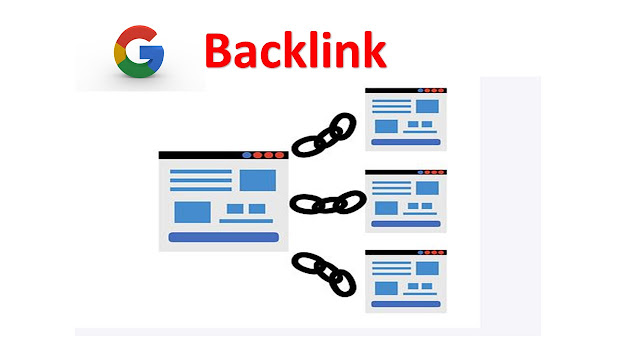
Backlinks are the second most important Google ranking factor after content. They are an important component of Google's ranking algorithm, and they are how the Google crawler finds your website for indexing. In fact, content and backlinks go hand in hand, as pages with no backlinks receive very little organic traffic.

Backlinks Ranking Factor


Backlinks-Ranking-Factor

So, how important are backlinks for your website's SEO?

Backlinks or inbound links are essentially a vote of confidence in your website. Google totals all of the votes and determines whether your website is worthy of ranking in the top ten results.

You can increase your chances of ranking higher if you can obtain backlinks from high-authority websites. This is because acquiring these links sends a signal to Google that your content is trustworthy because multiple websites can vouch for it.

3. Intention to Search

Matching the search intent of your content is another important ranking factor for Google. What a user is looking for is referred to as search intent.

Intention to Search

Every keyword on Google is unique, and you must understand the why behind that search query.

For example, if someone searches for the best WordPress themes, you'll notice that listicles appear in the top ten results.

Here's another case in point. If you search for "make banana bread," you'll notice that the results include recipes, how-to articles, and videos.

So, if you're going to create content on either of these topics, you need to match the search intent and create the right type of content.

Now, search intent may differ depending on the format and style of the content. For example, in some cases, Google will only show videos and infographics as top results. If you want to rank for those keywords, you should make a video or an infographic.

In addition, search intent indicates where your visitors are in the buyer journey.

Are they looking for basic information about your products, a tutorial like a how-to article, or are they at the end of the process and ready to buy?

You can answer these questions and create content that people want by matching the search intent.

4. Speed of Website Loading

Among the 200 different Google ranking factors, one that you should pay attention to is the speed of your pages. This is because, beginning in May 2021, Google will include website loading speed as one of its Core Web Vitals.

SEO Website Loading

This is a list of factors that Google believes are important for user experience on your website. It will examine the speed, responsiveness, and how quickly various elements such as fonts and images load. The goal here isn't to outperform your competitors in terms of load time. 

However, you should consider how quickly a page loads for your users.

Google wants your website to load quickly and provide your visitors with a positive user experience. The MonsterInsights Site Speed report can be used to test the loading speed of your website. 

It will analyze your website, provide a score for mobile and desktop, display important metrics about page load times, and highlight suggestions to make your site even faster.

Using a CDN, for example, is one way to improve the loading speed of your WordPress website (content delivery network). It ensures that your web pages load quickly for your users all over the world. 

Aside from that, you can look at these simple tips to improve the performance of your WordPress site.

5. Mobile Compatibility

Along with speed, another factor to consider is whether or not your site is mobile-friendly.

Since Google went mobile-first in 2019, it is critical that your website is mobile responsive. Mobile-first means that Google will now index and rank your website's mobile version.

Previously, Google would index your desktop as the primary version. With 3.7 billion mobile internet users worldwide, it's not surprising that Google has made this change.

As a result, if you want to improve your rankings, now is the time to make your website mobile-friendly.

You can begin by selecting a mobile-responsive WordPress theme. Alternatively, you can use various plugins to make your WordPress site mobile-friendly.

6. Domain Expertise

The domain authority of your website is the next Google ranking factor you should focus on (DA). It is a ranking metric that demonstrates your site's expertise on a specific topic as well as its ability to rank on search engines.

Moz creates domain authority and assigns a score between 1 and 100. The higher your domain authority, the more likely you are to rank on Google.

You can now increase the authority of your website in a variety of ways. Begin by acquiring high-quality backlinks. However, having a large number of backlinks does not always guarantee higher rankings.

This is where you must create amazing content that is relevant to your industry.

You can use MonsterInsights, the best Google Analytics WordPress plugin, to discover the most popular pages on your website to get an idea of what topics your visitors are interested in.

Then, to increase your topical authority, create high-quality content around these topics.

As a result, Google will begin to recognize your site as an expert on the subject, increasing your domain authority and ranking your pages in the top 10 search results.

7. Keyword Research

Aside from creating content and obtaining backlinks, the use of keywords on your website is one of the most visible ranking factors.

Keyword Research for SEO optimization

Keywords are the search terms that people use to find information on Google. As a result, it's critical that your website contains the keywords that your target audience is looking for. As a result, Google will be able to find your page in its search results.

Here are a few pointers to help you optimize your website for keywords:

Title Tags – Include your target keyword in the SEO title tags of your posts.

Meta Description – Create enticing meta descriptions that include your focus keyword so that users understand what your page is about and click on it.

Image Alt Text – Because Google cannot read images, you can use keywords in the image alt text section to explain what the image is about.

Anchor Text – Because Google uses anchor text to determine what a page is about, you can use your keywords as anchor text when linking your pages.

Use LSI Keywords – In addition to your primary keyword, people search for related terms, which are known as LSI (latent semantic indexing) keywords. By including these on your page, you're assisting Google in determining what the content is about.

Avoid Keyword Stuffing – Keyword optimization does not simply repeat your primary search term. This is known as keyword stuffing, and it is not a good SEO practice. Include your main search term a few times and then experiment with different variations.

Include Keywords in H2 and H3 – You can improve the SEO organization of your content even further by including keyword variations or LSI keywords in the H2 or H3 of your post.

Include Keyword in URL – Another method of keyword optimization is to include your keyword in the URL of your post.

8. Structure of the Website

While keyword optimization is important, you should also consider your site's structure, especially if you're just getting started with a website.

Structure of the Website

The architecture of your website is critical for crawling and indexing. It makes it easier for Google crawlers to find your website and its pages.

You can also begin by creating a sitemap in WordPress to improve the site's structure. A sitemap lists all of the important pages that you want search engines to be aware of.

It makes it easier for Google crawlers to navigate through your website, discover new content, and index your pages.

You can also assist Google in indexing your website by optimizing your WordPress robots.txt file.

A robots.txt file directs Google bots to your website and instructs them on how to crawl and index it. It is useful for indicating which pages search engine spiders should and should not crawl.

As a result, you'll save crawl quota and the bots won't visit pages that aren't required, such as the admin page.

9. Website Safety

Along with website architecture, Google now considers security to be a key ranking factor. This is the point at which you must ensure that your website is now using HTTPS, which encrypts data sent between your website and the user's browser.

In 2014, Google confirmed that HTTPS is now a ranking signal. So, if your website does not have SSL certificates and is not using HTTPS, now is a good time to update.

10. The User Experience

The final Google ranking factor we have for you is your website's overall user experience. There are numerous factors that contribute to a positive user experience.

user experience-seo


But how does Google quantify this?

It employs an artificial intelligence program known as RankBrain, which incorporates additional ranking signals such as:

CTR (click-through rate) – This is the percentage of people who click on your website link in the search results. You can improve your rankings by increasing your CTR, especially if you're stuck in the top 5 results.

11. Bounce Rate

 A high bounce rate is bad for your website. If a large number of people click on your site and then click the back button without interacting with it, Google will consider the page irrelevant and will not rank it.

12. Dwell Time 

This is the amount of time a visitor spends on your site after arriving from Google search results. The longer the dwell time, the better.

While these are some of the most important ranking signals used by Google's RankBrain, there are many more. However, because the majority of them are speculative at this point, we recommend you stick to the three factors we discussed above.

That's it!

I hope you found this post on the Most Important Google Ranking Factors for your website useful. 


List of All Google Algorithm Updates : A Complete History

List of All Google Algorithm Updates : A Complete History

Search engine optimization updates


If you are a beginner or have only recently entered the world of digital marketing, the Google Algorithm is a difficult concept to grasp. I assume this because studying the Google algorithm updates is critical for any digital marketer, SEO, or webmaster who wants to stay in the online industry. 

Google used to make a slight number of updates per year, but now it brings thousands of updates per year. No, that's shocking! 

Search Engine Optimization is a detailed and progressive strategy, and updates should not have a major impact on your website rankings as long as you focus on EAT (expertise, authoritativeness, and trustworthiness) and best practices. 

However, as a marketer, webmaster, or business owner, it is essential to monitor updates and review your performance in order to fine-tune your strategy and capitalize on available opportunities. 

So, if you want to read about Google's significant algorithm updates, you've come to the right place. This article is a collection of all major Google Algorithm updates. However, first, grasp the concept of the Google Algorithm outlined below.

What exactly is the Google Algorithm?

Google-search-algo


The Google Algorithm is a complex system that retrieves data from its search index and instantly returns the best possible results for a query. And updates are designed to improve the end-user experience when visiting a specific website. This can have an impact on the website in both positive and negative ways.

Let's get started with the list of 21 major Google Algorithm updates.

The following are the most significant Google algorithm updates.

1. Panda – 24 February 2011

Google panda search algo


Panda is Google's first significant algorithm update, which was published on Feb 24, 2011. The update's main goal was to concentrate on the content quality score to website pages and de-scale the site with low-quality, spammy, or thin content. Panda used to give web pages a 'quality score.' This score is used by websites as a ranking factor. 

Panda began as a filter rather than a component of Google's ranking algorithm, but in January 2016, it was officially upgraded to a core algorithm.

Panda's versions have also been updated, including:

Panda 2.0 was released on April 11, 2011, and included additional signals such as sites that Google users had blocked.

  • Panda Update 2.1 was released on May 9, 2011.
  • Panda Update 2.2 was released on June 21, 2011.
  • Another Panda update 2.3 will be released on July 23, 2011.
  • Panda Update 2.4 was released on August 12, 2011.
  • Panda 2.5 was released on September 28, 2011.
  • And the most recent Panda update 3.0 was on October 19, 2011.

Suggestion:

Content such as duplicate content, plagiarism, user-generated spam, poor user experience, thin content, and keyword stuffing would all be penalized under the Panda update.

To avoid Google penalties, use the site crawler to check keyword density, thin content, and duplicate content. You can use Website Auditor, a plagiarism checker tool.

2. Penguin – April 24, 2012

The penguin algorithm update is the next major update following Panda.

Penguin search update


The penguin algorithm update is the next major update following Panda. The Penguin update was released on April 24, 2012. The Penguin update's main objective was to de-rank sites with links that appeared to be manipulative. It detects unnatural link profiles that are spamming search results by employing manipulative link strategies. 

Penguin was incorporated into Google's core ranking algorithm in 2016, and it now operates in real-time. 

The algorithm also ensures that penalties are now issued more quickly and that recovery takes less time.

Suggestion:

Spammy or irrelevant links, over-optimized anchor text, Paid links, and links from sites created solely for SEO link building are all unacceptable.

Backlink checker tool SEO SpyGlass should be used on a regular basis to audit your site. You can also check for the possibility of a penalty. Let me state unequivocally that Google will not penalize your site for having 1-2 spammy links, but a sudden influx of irrelevant backlinks can be problematic. Furthermore, you can request that spammy links be removed from the site.

3. Hummingbird – August 22nd, 2013

Hummingbird is another Google algorithm update that was released on August 22, 2013. The main goal of the update was to improve the interpretation of search queries as well as provide results that meet the searcher's intent. Hummingbird is unique in that it would rank a page for a request even if it does not contain the words exactly entered by the searcher. 

What is Google Hummingbird update

Hummingbird also optimizes the use of synonyms. As a result, instead of displaying exact keyword matches, Google shows the most theme-related results in the SERPs which may or may not contain the query's keyword in their content.

Google stated that the Hummingbird update impacted approximately 90% of global searches.

Suggestion:

Low-quality content, exact-match keyword targeting, and Keyword stuffing are all heavily emphasized. To enhance your site's ranking, you must incorporate SEO keywords into your subject matter. Use synonyms and co-occurring terms sparingly. All of the Hummingbird-friendly search terms are included in SEO PowerSuite's Rank Tracker keyword research module.

4. Pigeon – July 24, 2014

Pigeon Google Algorithm update was released on July 24, 2014, in the United States. Another update was released on December 22, 2014, in the United Kingdom, Canada, and Australia. The update emphasized the importance of On-page and Off-page SEO quality. 

According to Google, Pigeon strengthened ties between both the local and core algorithms, implying that the same Search engine factors are now being used to rank local and non-local Google results. Pigeon update ranks the results based on two key factors: location and distance.

Google Pigeon Algorithm update


Suggestion:

Majorly focus on poor on-and-off-page SEO, lack of citation in local directories, inconsistent NAP, poorly optimized pages,  and irrelevant Google My Business Page setup.

Make an investment in both on-page and off-page SEO. To perform an on-page analysis, use the Website Auditor tool. Optimize your pages appropriately. Furthermore, you can examine a list of off-page SEO in relevant business directories. Your site will rank higher in Google's SERPs if you take this approach.

5. Google mobile-friendly update – April 21st, 2015

On April 21, 2015, the mobile-friendly update was released. The update (dubbed Mobilegeddon) was released to ensure that smartphone users could easily access the website. Mobile-friendly websites will rank at the top of mobile search results, while pages that are not optimized for mobile will be penalized and will be filtered out of SERPs or will rank lower. 

Furthermore, this update has no effect on desktop searches. Since 2015, all digital marketing firms have been creating mobile-friendly websites.

Suggestion: 

Better viewpoint configuration, poor mobile usability, Illegible content, the absence of a mobile version of a website, and a non-mobile-friendly website.

6. RankBrain – October 26th, 2015

On October 26, 2015, Google released yet another major algorithm update. Google's Hummingbird algorithm includes Rank Brain. Essentially, it is a machine learning system that assists Google in better understanding the meaning behind queries and determining how best to respond to those queries. 

RankBrain can also summarise a page's content and assess the relevance of search results. RankBrain is the 3rd biggest ranking factor, as per Google.

Google RankBrain Algorithm update

The RankBrain algorithm identifies query-specific ranking keywords that are relevant features for website pages ranking for a given query.

Suggestion:

Poor user experience, low-quality or non-existent content, and a lack of query-specific relevance features. To provide a better user experience, you must conduct a competitor analysis. Keep track of your users' activities with Google Analytics, such as session duration, bounce rate, and so on. 

7. Possum Update – September 1st, 2016

The update was released on September 1, 2016. This algorithm is well-known for introducing a slew of changes to Google's local ranking filter. The closer you are to a business's address, the more likely it will appear in local search results. 

Following the Possum, Google displayed more varied results based on the searcher's physical location. Furthermore, Possum boosted businesses located outside of the physical city limits.

Google Possum  Algorithm Update
Suggestion:

In your targeted area, take a glance for competitors who share a physical location with a similar industry, and look for competing companies whose business is closer to the searcher's location.

You can broaden your relevant keywords and track rank by location. It is critical that you track your positions for each variation separately. To look for variations, launch SEO PowerSuite's Rank Tracker and create and open a project. Now navigate to the keyword analysis module and select suggested keywords.

8. Fred Update– March 8, 2017

Fred In 2017, Google released an algorithm update. The update targeted websites that did not follow Google's webmaster guidelines. As a result, the majority of the affected sites are blogs with low-quality posts. These posts were created primarily to generate ad revenue or affiliate revenue. 

Marketers or webmasters who create these types of sites to generate revenue will be penalized as a result of this update.

Google algorithm update September 2020
Suggestion:

Ad-centered, low-quality, content that is thin and heavily reliant on affiliates.

Peruse the Google Search Quality Guidelines and keep an eye out for thin content. Even though you display ads, ensure the pages are of great quality, relevant to the offer, and have plenty of information.

You can't fool Google with a page full of affiliate links. If you do this, your website will be penalized soon.

9. March 2018 – Broad Core Algorithm Update

Google launched the Broad Core Algorithm Update on Twitter on March 2. This update concentrated on getting a greater understanding of the user's search queries and website. The primary goal is to improve Google's accuracy in corresponding search queries in order to have a better user experience and satisfaction. As a result, pages that were not previously rewarded will now rank higher.

Google algorithm update 2021 August
Suggestion:

Sites are being targeted for ranking signals, quality assurance, and the incorporation of new features to improve user experience.

All you have to do is concentrate on creating high-quality content, building high-quality backlinks, and sending out social signals. Content should be relevant to the keyword and phrase that your audience is looking for.

10. BERT Update – October 25th, 2019

BERT is the most significant algorithm update, which was released on October 25, 2019. To better understand search engine queries, Google used the BERT model. According to Google, this change had an impact on both search rankings and featured snippets. BERT Update is all about a deep learning algorithm for natural language processing. 

It assists the machine in learning what a word means in a sentence with all of the nuances of the context.

BERT algorithm explained
Suggestion:

Understanding the context of the sentence, improving search query comprehension, and avoiding the use of sloppy content

To keep safe, you must continue to optimize your posts, which may include images or videos, that you publish on your website.

11. Core Update for January 2020

This update was released last year, January 2020. This algorithm change had a significant impact on all search terms or results on a global scale. According to Google, core updates are "significant broad changes to our search algorithms in order to present pertinent and authoritative content to searchers."

Suggestion.

Concentrate on producing high-quality content; excellent content is rewarded, and ultra-spammy content is de-indexed.

Don't overcrowd your site with affiliate links; you can't fool Google in any way. Produce high-quality content and avoid adding low-quality links to the site.

12. Google Core Update — May 4, 2020

The second update of 2020 was once again announced on the day the update was released.

Another core update closely linked to the EAT and Medic signals was the Google May 2020 Core Update. It restructured ranking factors, giving more weight to brand factors, content, and user data.

This intended that while larger businesses benefited from the update, sites in the YMYL categories with potentially untrustworthy financial and health information suffered.

13. Google Core Update — December 3, 2020

Google delivered the third major update of 2020 as an early Christmas present. It began on December 3rd and took about a week to complete.

The December 2020 Core Update did not affect many websites, but those that were affected experienced major changes. Because it was so close to the release of passage indexing, it is thought to have focused on content interpretation and search intent.

The update, however, primarily impacted reference and news websites, where SERP (Search Engine Results Page) features became more prominent. However, many smaller retail websites experienced initial losses that were quickly reversed.

The most important Google algorithm updates are in 2021.

14. Passage Ranking Revision (February 2021)

Google can now use AI technology to index not just web pages, but also individual passages (passages, sentences) from those web pages, thanks to the passage ranking update. As a result, particular passages may appear as the featured snippet. Rather than making the user comb through relevant website pages to find out the answer, the goal is to quickly respond to very specific queries.

Google passage algorithm
Suggestion:

The point here is not to optimize your articles for passage ranking, but rather to:

  • Long-tail keywords should be targeted.
  • Provide detailed, high-quality content on the subject.
  • Structure your webpage content properly and make Googlebot's indexing relatively easy.


15. A revision to the "About this Result" section - February 2021


Google about this result beta

Google's "About this result" feature, which was introduced in February 2021, adds context to individual search results, allowing users to determine which results will be most useful to them.

  • The "About this result" box contains the following information:
  • When Google first indexed the page's website.
  • Check to see if your connection to the site is safe and protected.
  • Which terms from your search appear on the page?
  • Whether or not other websites containing those keywords link to the page.
  • The language used on this page.
  • Whether it appears relevant for this search in a variety of regions.

If you have a reference on Wikipedia, it will pull a short outline from there not meta tags.

Users can determine whether a site is trustable or not by learning about it before entering the results. This would especially help users find authoritative and trustworthy but unpopular sites on the internet. However, the feature is still in beta.

The "About this result" box has no bearing on your ranking; it's simply a list of page facts, some of which may be ranking factors. This includes the following:

  • Ensure that your website uses HTTPS.
  • Obtaining high-quality backlinks.
  • Appropriately matching the keyword's purpose.


16. Updated Indexing to be entirely mobile-first (March 2021)

With the increase of mobile traffic in the 2010s, Google began emphasizing mobile-friendliness as a ranking factor. A year afterward, Google announced mobile-first indexing, which refers to when Google crawls—and thus ranks—your webpages based on the mobile version of that content.

Mobile-first indexing had become the de facto standard for all new sites in July 2019. And it will be the default for all websites, old and new, as of June 2021.

To make your website more mobile-friendly, follow these steps:

  • Ensure you have a responsive website.
  • Lazy loading and image compression should be used.
  • On your smartphone, always manually check popups and form functionality.

Mobile-friendliness functions on a page-by-page basis, but site-wide mobile performance indicators can be found in Search Console's mobile usability report and Google's Mobile-Friendly Test tool.

Lazy loading is an excellent Search engine technique. It means the practice of delaying the loading of images on a site when they are required. The images are really not loaded until the user sees them on the screen. The image appears when the user scrolls to the section of the page that contains the image.

17. Product reviews have been updated (April 2021)

The goal of this major Google algorithm update was to encourage product reviews that provided in-depth research, original content insightful analysis, and rather than simply summarizing a range of products.

So, in order to develop high-quality product review content, it is recommended that you:

  • Demonstrate extensive knowledge of the products.
  • Share content that is different from what the manufacturer offers.
  • Focus on providing quantitative performance measurements.
  • Make a comparison to earlier models and other products.
  • Assist customers in making sound purchasing decisions.

18. MUM Status Report (May 2021) - Multitask Unified Model 

Google has made progress with AI in its algorithms, the most recent of which was the May 2021 MUM update.

google multitask unified model-mum
The MUM is a natural language model that is far more powerful than the BERT of October 2019. (bidirectional encoder representations from transformers).

MUM is intended to "assist you when there isn't a simple answer." MUM's aim is to propose detailed answers to complex questions by combining contextual information from various sources.

Multitask Unified Model (MUM) is being trained in 75 languages so that it can recognize relevant answers in languages other than the one in which the query was written.

This does not imply that you should begin writing posts in which you answer complicated questions. Just make sure to perform keyword research and continue to post long-form content that focuses on long-tail and question keywords.

19. Update on Link Spam (June 2021)

Google's spam algorithm update for June 2021 was deployed on the website page and image results.

Google link spam algorithm

It was divided into two phases, each of which Google promised would begin and end on the same day—but it took two weeks longer than planned. There weren't many specifics in this update, but it's always a good idea to double-check and ensure your website is spam-free.

You should always be careful of these malicious actors if your website allows for user interaction through forums, comments,  and so on.

So here are a few simple tips to help you protect your site from spammers:

  • Update the SSL certificate on your website.
  • To verify for security risks and manual activity reports, use Google Search Console.
  • Perform regular clean-ups of suspicious spammy activities, such as multiple requests from the same IP address.
  • Noindex can be used to prevent Google from indexing low-trust pages, particularly those that show user-generated content. You could also mark the links as nofollow.

20. Page Experience Improvement (June 2021)

In addition to indexing mobile versions of sites, Google has launched a new set of metrics known as Core Web Vitals as part of the page experience update. These are newly prioritized factors for quantifying a user's experience with a website.

These are some examples:

  • Cumulative Layout Shift (CLS): the degree to which the layout is stable (— in other words, elements do not jump around unexpectedly).
  • First Input Delay (FID): the time it takes for a website page to respond to the user's first action on the page.
  • Largest Contentful Paint (LCP): how quickly a page's main content loads.

The actual data for such metrics can be found in Search Console's Page Speed Insights or the full Core Web Vitals report. All of these reports include suggestions for enhancing the page's responsiveness.

These metrics, once again, have been around for a long time. However, they now have a greater influence on your rankings. In essence, webmasters must increase their UX optimization efforts.

You can improve your Core Web Vitals by doing the following:

  • Remove any interstitials or banners that obstruct content.
  • Javascript execution should be reduced.
  • Utilize lazy loading.
  • Image optimization and compression
  • Give images and embed proper dimensions.
  • Enhance server response time. 

21. Title Change on The Page (August 2021)

Google has been adjusting page titles in the SERP based on the query for more than a decade. However, beginning on August 16, users began to notice that Google was drastically changing their page titles, often in a negative way. 

A week afterward, Google confirmed that it had announced a new system that will no longer adjust titles based on queries, but rather on how the page as a whole is represented.

[Recap] Google algorithm updates - till 2021

The following are the updates we discussed in this article:

1. Panda – 24 February 2011

2. Penguin – April 24, 2012

3. Hummingbird – August 22nd, 2013

4. Pigeon – July 24, 2014

5. Google mobile-friendly update – April 21st, 2015

6. RankBrain – October 26th, 2015

7. Possum Update – September 1st, 2016

8. Fred Update– March 8, 2017

9. March 2018 – Broad Core Algorithm Update

10. BERT Update – October 25th, 2019

11. Core Update for January 2020

12. Google Core Update — May 4, 2020

13. Google Core Update — December 3, 2020

14. Passage ranking revision (February 2021)

15. A revision to the "About this Result" section - February 2021

16. Product reviews have been updated (April 2021)

17. Product reviews have been updated (April 2021)

18 MUM status report (May 2021) - Multitask Unified Model 

19. Update on link spam (June 2021)

20. Page experience improvement (June 2021)

21. Title change on the page (August 2021)

To End Up -

Finally, here is a comprehensive list of major Google algorithm updates from 2011 to 2020. I have only mentioned major updates that I believe are most important for every digital marketer, SEO, webmaster, or industry expert to be aware of. 

I hope that this post was helpful in understanding the concept of significant Google Algorithm Updates.